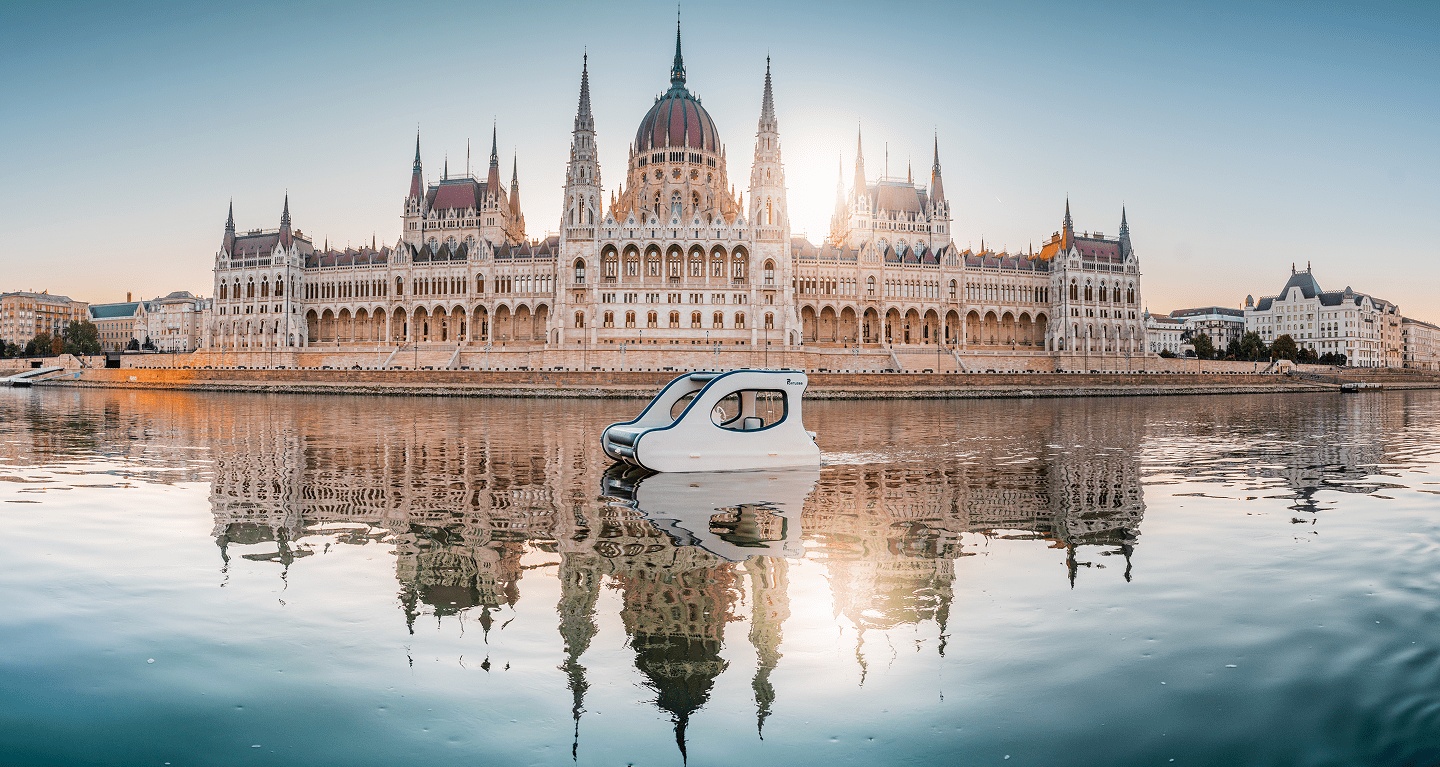
Third Generation (2023-2026)
Built Together with the Community
Customer-Driven Development
From the very beginning, Portless International Ltd. established a core principle: all developments should be guided by the community—customers and end users alike.
Following the successful market launch of the second generation, the team was faced with an overwhelming number of development ideas. The logical response was the introduction of the next series of Portless boats.
Thus, in 2023, the third generation of Portless boats was born.
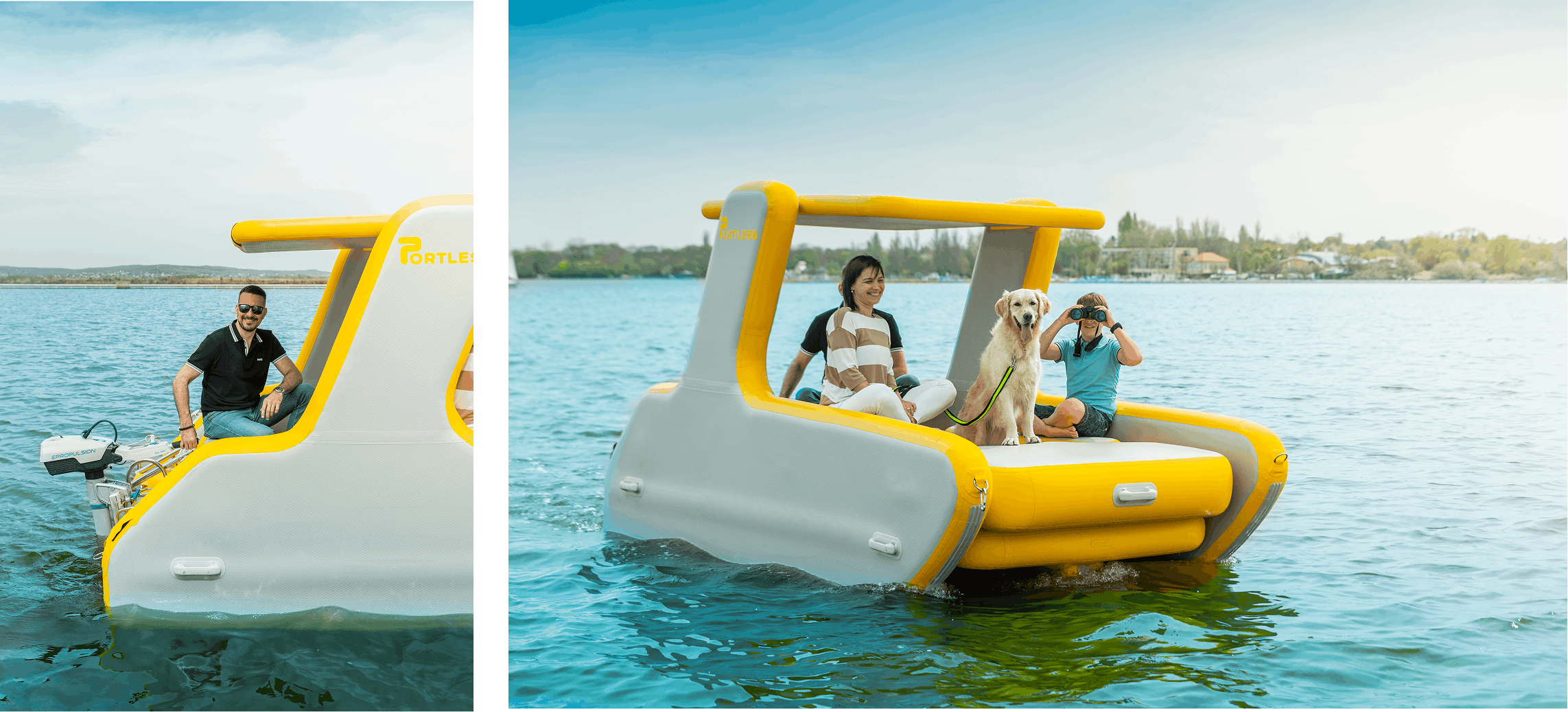
Portless Dinghy – Small Changes, Big Impact
Within one year of its launch, the Portless Dinghy was purchased by a large number of customers. Thanks to their feedback, the team quickly identified clear improvement needs:
- More grab handles
- A more easily accessible tiller
- An even more compact size
As a result, the second-generation Portless Dinghy also introduced a new packaging solution for Portless boats: a reinforced carrying bag with tension straps, significantly improving transport convenience.
In addition to these refinements, the model received newly developed ladders, allowing effortless boarding with exceptional ease.
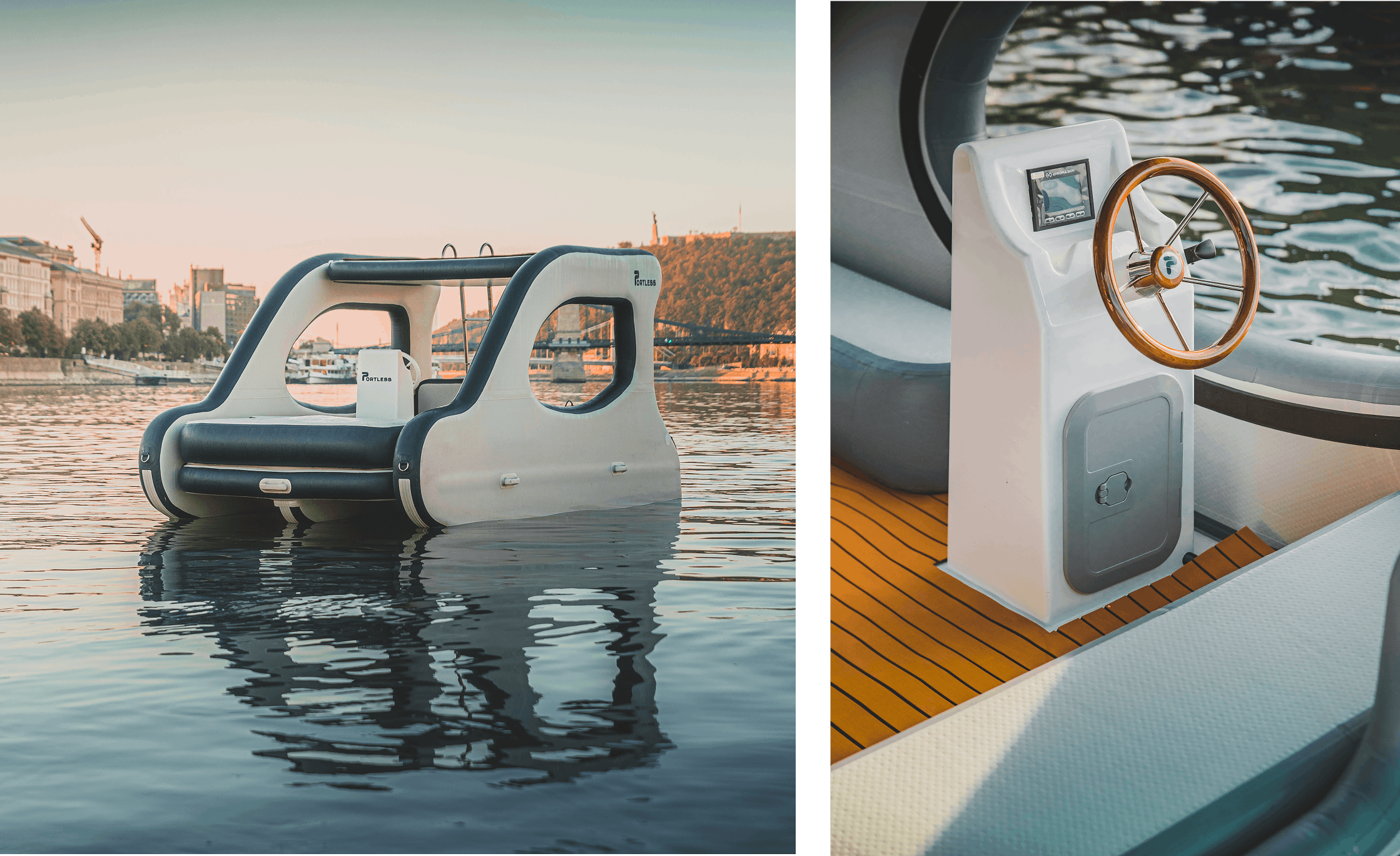
Portless Trinity – Refinement of the Mid-Range Icon
The situation was different in the mid-range category.
Customer feedback indicated that users wanted to further elevate an already high-quality product, both in terms of:
- Material selection
- Aesthetic appearance
As a result, the second-generation Portless Trinity received primarily aesthetic upgrades, alongside functional additions such as:
- A new type of swim ladder
- Integrated storage compartments
This generation also marked the introduction of new optional Portless colorways. Feedback showed that the grey–white combination was perceived as dull and prone to visible dirt.
The third generation of the Trinity crossed both the Atlantic and Indian Oceans, becoming available in the USA and Australia.
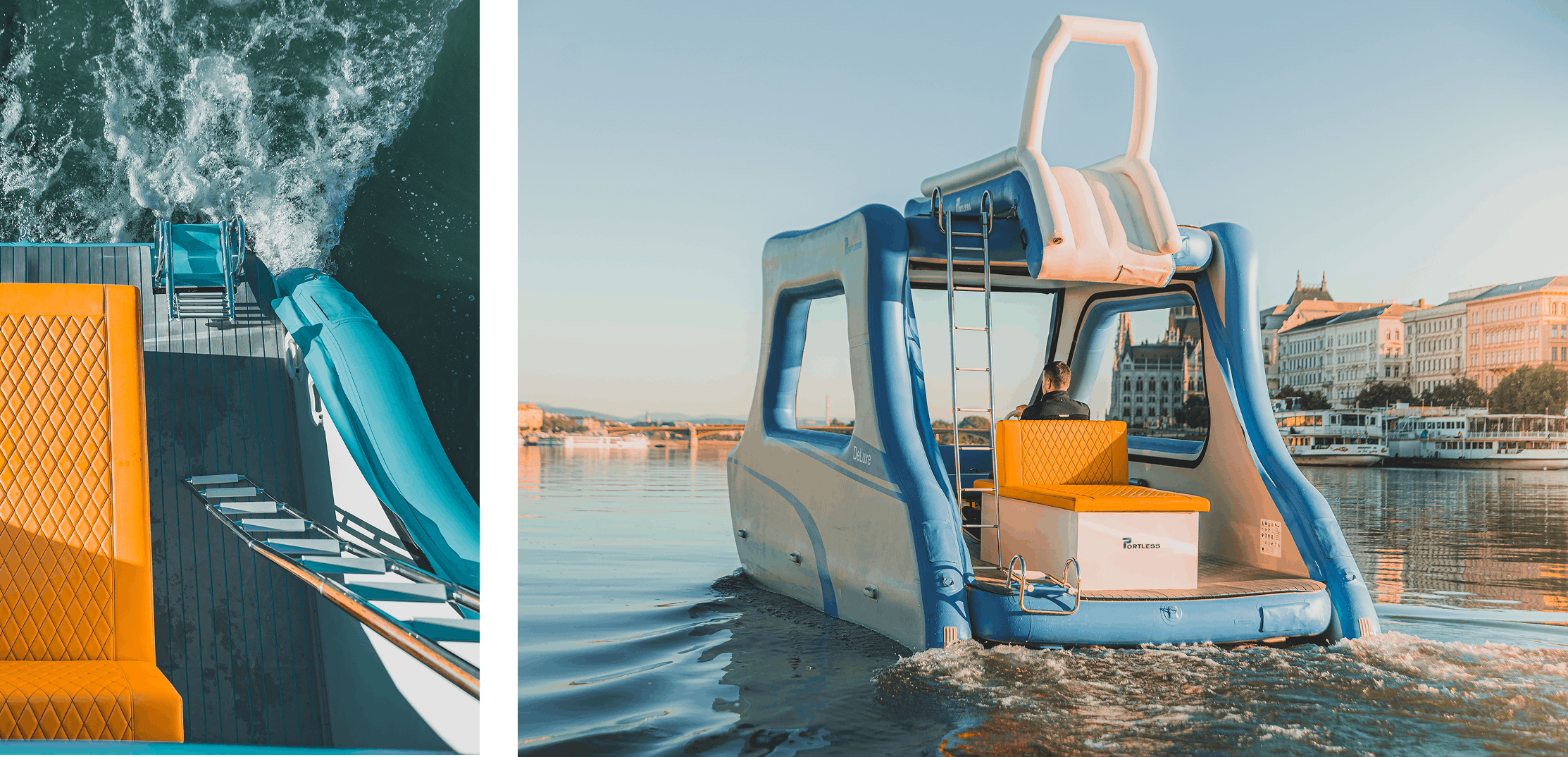
Portless DeLuxe – Premium Refinement and Personalization
At the top of the Portless portfolio, changes were again predominantly aesthetic, but no less impactful.
The helm station received:
- Integrated hinges
- A revised internal layout
- Gas struts and additional usability-enhancing innovations
With this generation, customizable upholstery was introduced.
Customers could now personalize not only:
- Colors
- But also stitching patterns, tailoring the boat to their individual taste.
Although electric propulsion is generally not recommended for river or open-sea use, the excellent power-to-weight ratio of the 6 kW ePropulsion motor proved highly effective.
Paired with the new streamlined hull, it enabled speeds of up to 16–17 km/h, an exceptional result for an electric setup.