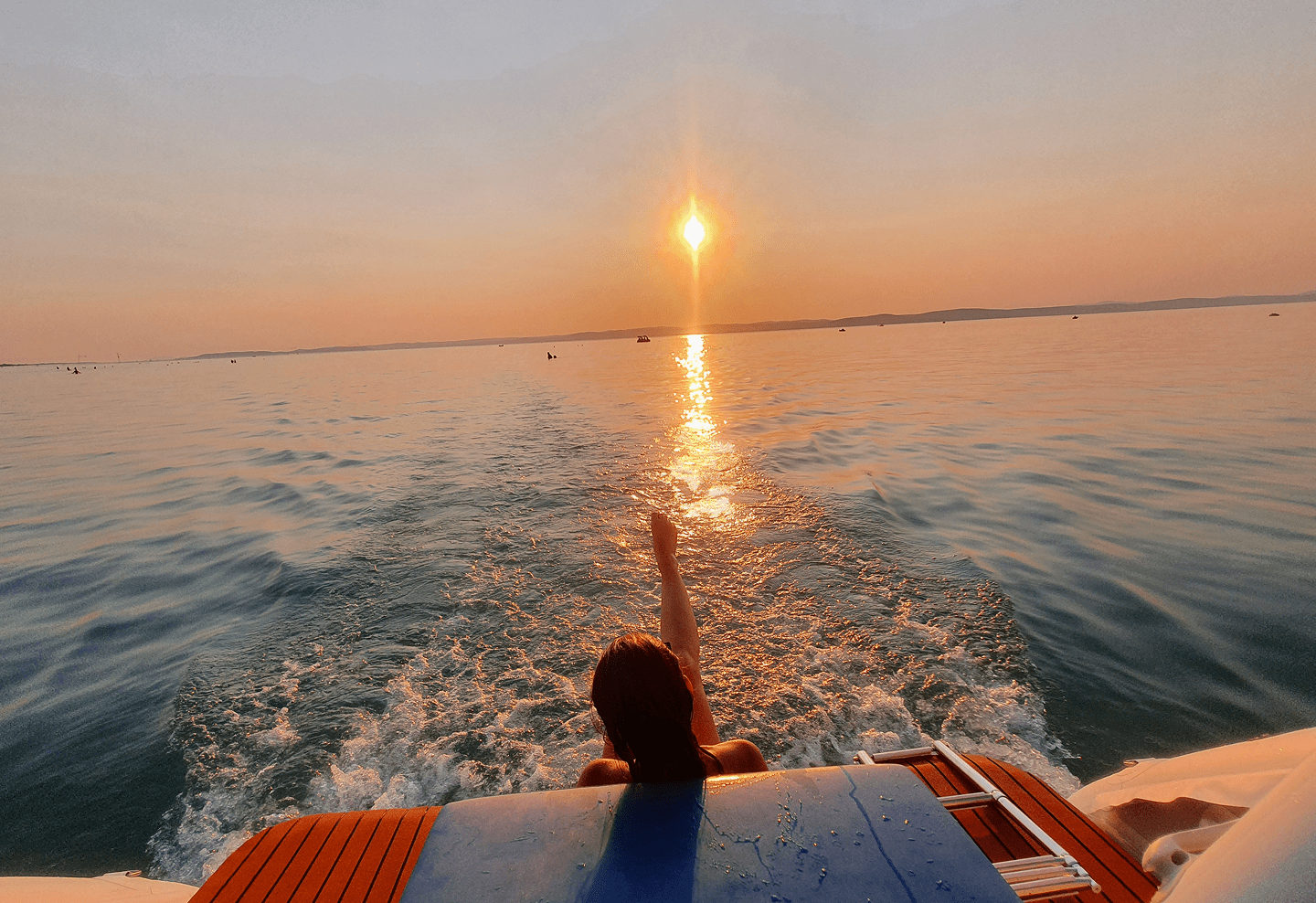
Second Generation (2022-2023)
When Portless Became a Boat Builder
Development Driven by Progress
The entire second generation of Portless boats was inspired by progress. While this may sound like a marketing cliché, it accurately reflects reality.
This was the point when Portless began fully independent development. A completely new team of engineers and designers, along with a renewed leadership structure, took over the project.
The core objective was clear: to transform Portless products into true boats.
While the first generation more closely resembled inflatable platforms with sidewalls, the second generation was designed to stand its ground as a real vessel.
As a result, the primary development priorities became:
- Improved handling
- Enhanced safety
- Higher speed
- Optimized energy efficiency
- A refined and appealing design
Each model presented unique challenges due to its size, and the Portless team addressed them one by one.
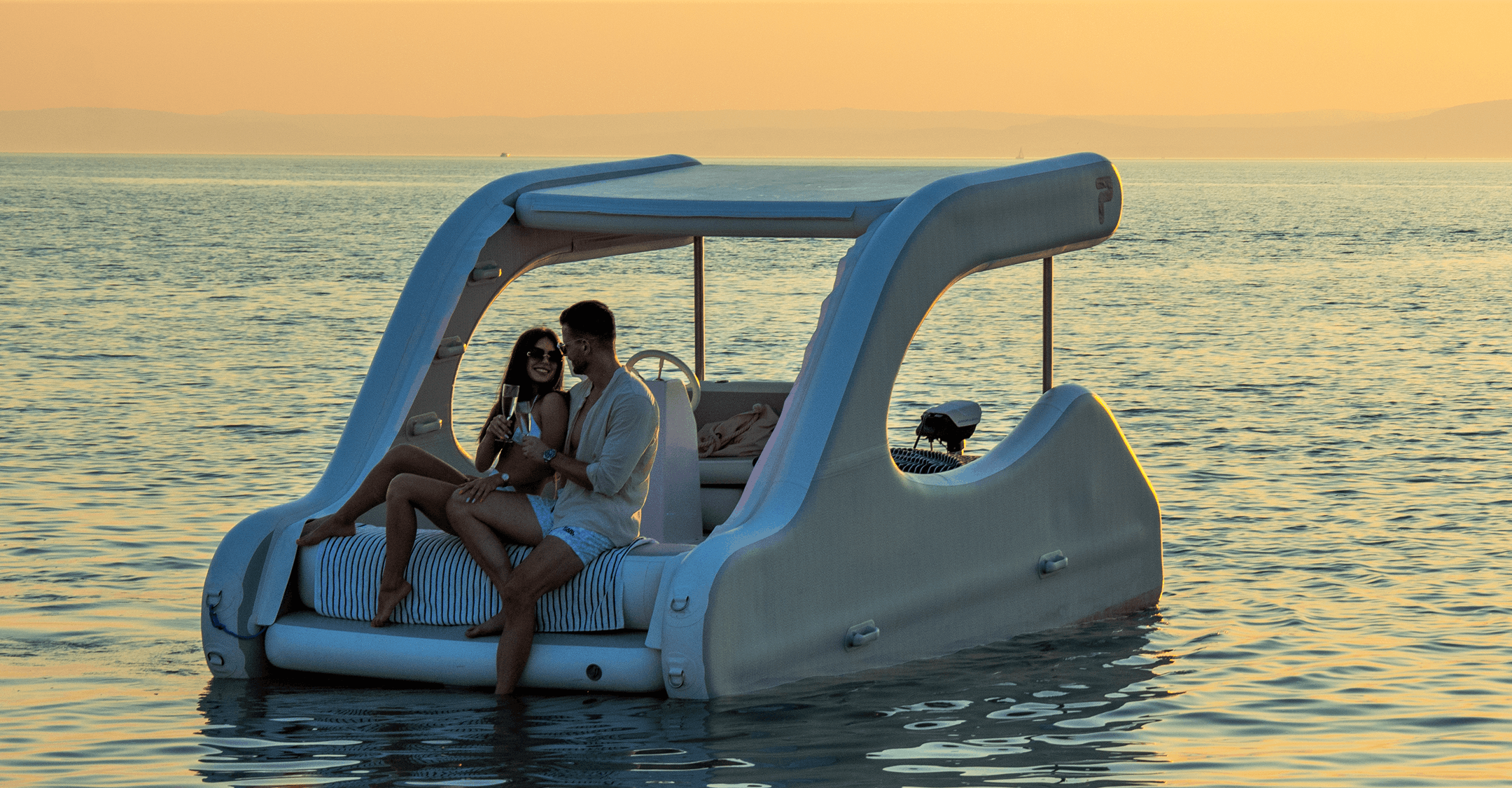
Portless Trinity – The Pioneer of the Second Generation
The second-generation Portless Trinity was the trailblazer of the product range. It was the first boat entirely designed by Portless.
The prototype phase was far from easy. Although the early version already outperformed first-generation models, the development team and new management agreed that further refinement was necessary.
After nearly a year of continuous testing and experimentation, the team delivered the boat they had originally envisioned.
Key upgrades included:
- A non-slip EVA deck surface
- A new ladder providing roof access
- A custom-designed helm station, with instruments integrated directly into the console
Thanks to its practical layout, excellent handling characteristics, and user-friendly design, the Portless Trinity quickly became the brand’s best-selling model.
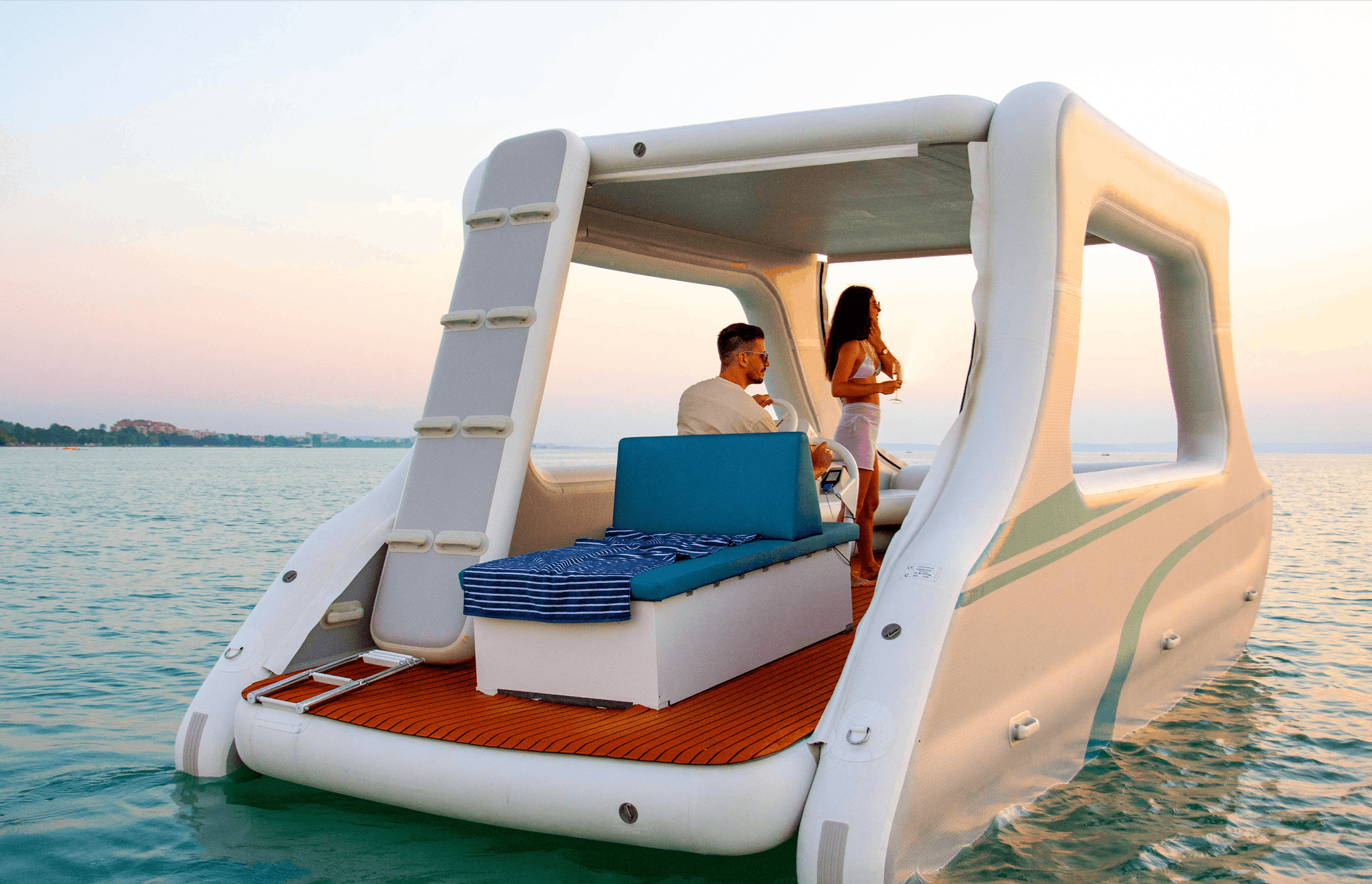
Portless DeLuxe – The Inflatable Yacht Vision
The Portless DeLuxe underwent the most dramatic transformation.
With its 7-meter length and 3-meter width, it no longer qualified as a small boat. The manufacturer therefore decided to invest its full expertise into developing an inflatable yacht designed to become a future market icon.
Key features included:
- An aluminum helm station housing the battery and complete charging system
- A water-sealed rear compartment concealing the outboard engine
- A roof structure capable of comfortably supporting four people
- A spacious deck designed for up to ten passengers
Despite its size, the outboard propulsion system ensured excellent maneuverability, while the new hull design and aesthetics allowed confident operation in 2–3 meter waves.
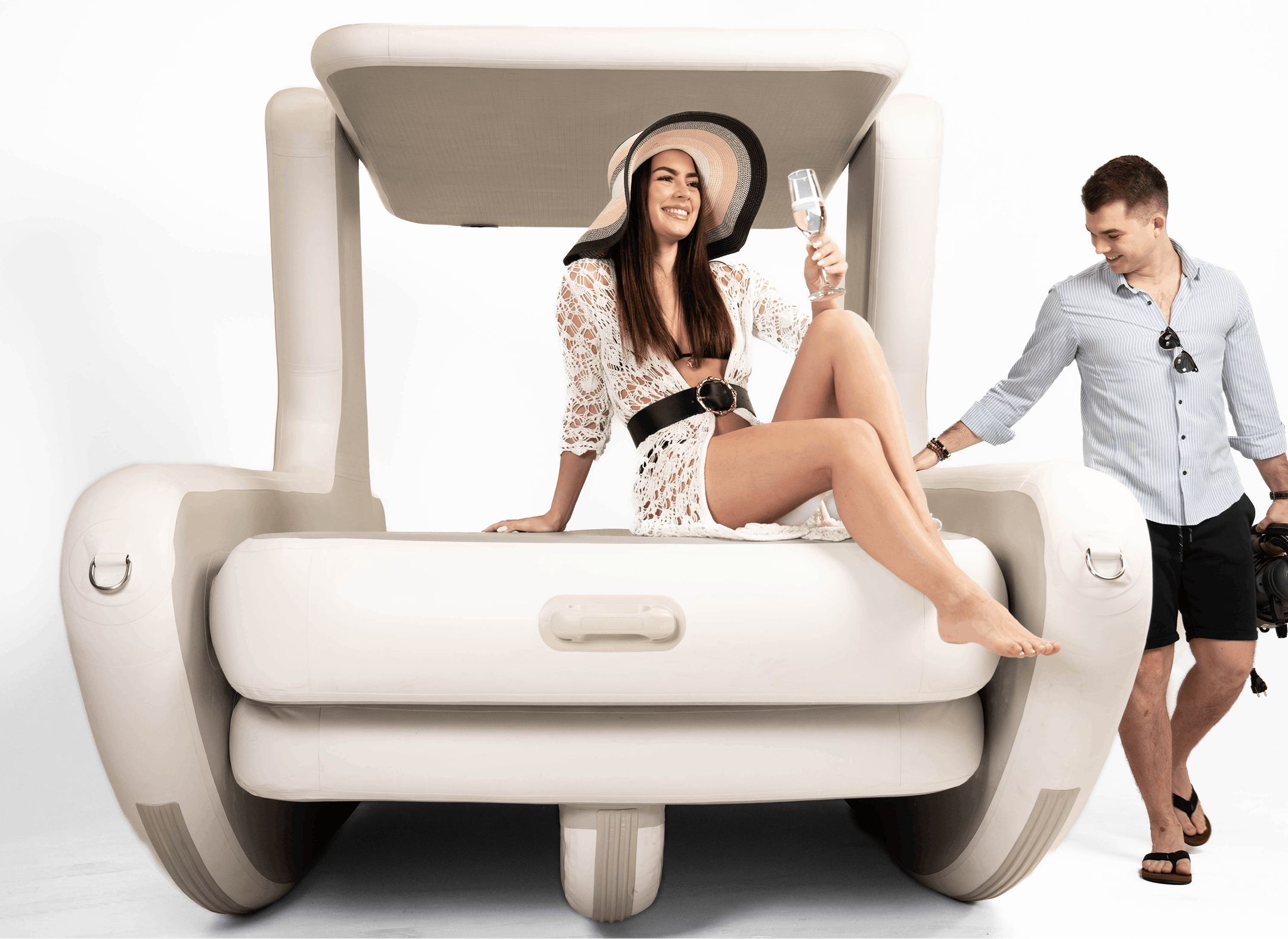
Portless Dinghy – Mobility Without Compromise
Following market launch, it quickly became clear that a smaller sibling was needed.
Many customers were looking for an even more mobile boat with superior foldability. In response, the design team reconvened to create the ideal Portless boat for travelers and caravan owners.
The primary objective was maximum compactness, without sacrificing:
- Stability
- Handling performance
Despite the challenge, the Portless Dinghy emerged as a highly maneuverable model, capable of being packed into a significantly smaller size than the Trinity (70 × 70 × 50 cm).