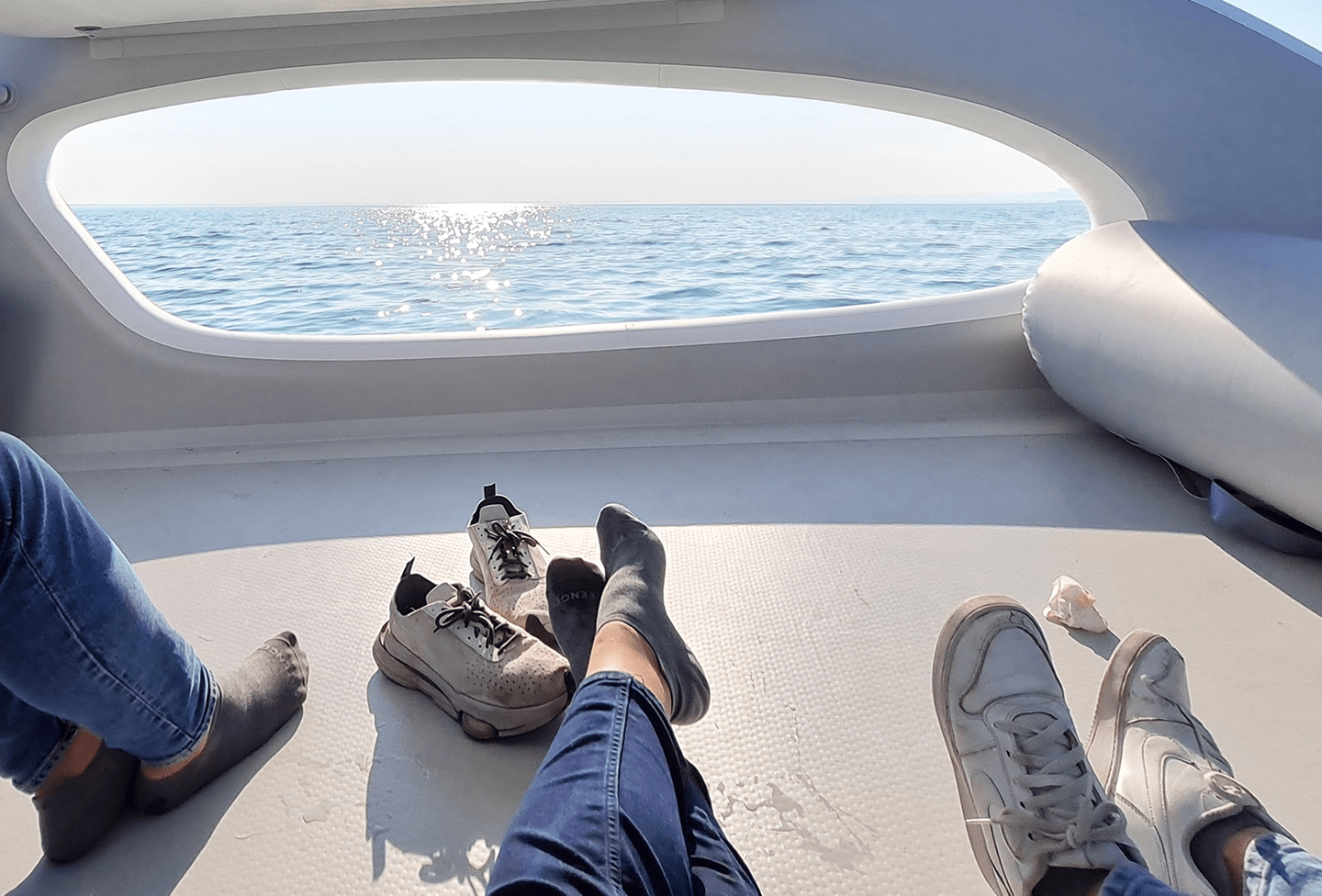
First Generation (2020-2022)
The Origins of Portless Boats
How It All Began
The first generation of Portless boats was launched in 2020 through a Slovenian–Hungarian collaboration. Based on Slovenian foundations, the Hungarian company created the first Portless boats primarily for its own use, as marina rental fees were increasing dramatically at the time.
Shortly thereafter, the vision expanded toward building a rental fleet in Hungary and Central Europe.
These early boats were manufactured from single-layer, glued PVC.
However, during operation, several areas requiring improvement quickly became evident.
Early Limitations and a Defining Decision
The boats:
- Could not be operated safely in choppy or wavy conditions
- Failed to meet customer comfort expectations
As the contract manufacturer did not agree with the required development direction, the founder of Portless faced a critical decision:
- Begin independent product development
- Or abandon the project entirely
From this turning point, the story of the second generation of Portless boats begins.
But first, Which models belonged to the first generation? Let’s take a closer look.
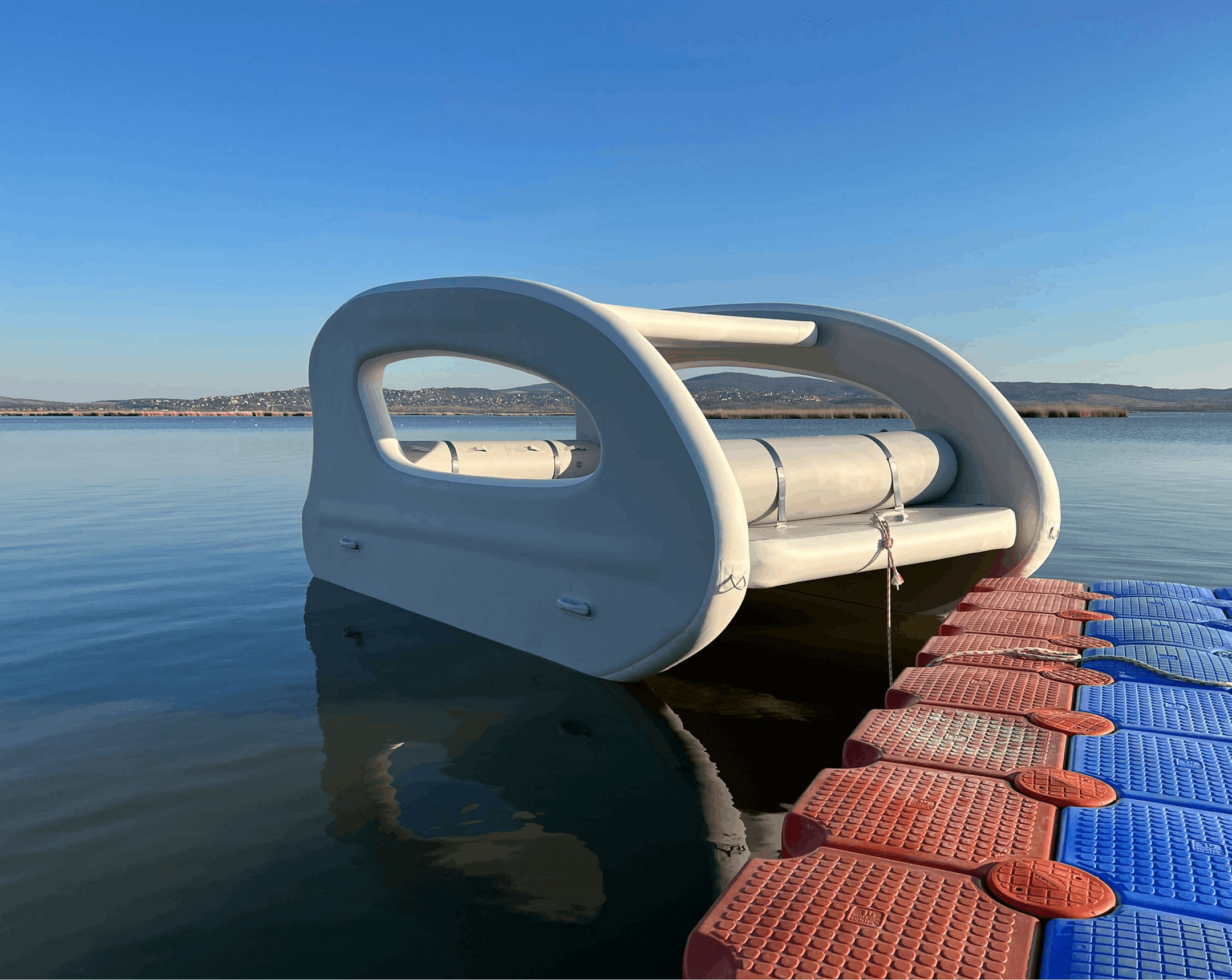
First-Generation Models
Portless Basic (450)
The strength of this model lay in its simplicity. It consisted of very few components, and steering was handled via a traditional throttle lever, similar to conventional dinghies.
Advantages:
- Affordable
- Simple construction
Disadvantages:
- Short service life
- Unstable operation in waves and wind
- No storage compartments
- No proper seating or helm position (uncomfortable during extended use)
- Slippery deck surface
Building on the positive aspects of this model, the Portless team later returned to the drawing board to design a boat that would remain:
- Affordable
- Simple
Yet also:
- Capable in waves
- Built from high-quality materials
- Safe in poor weather conditions
- Equipped with proper seating
This development ultimately led to the creation of the Portless Dinghy.
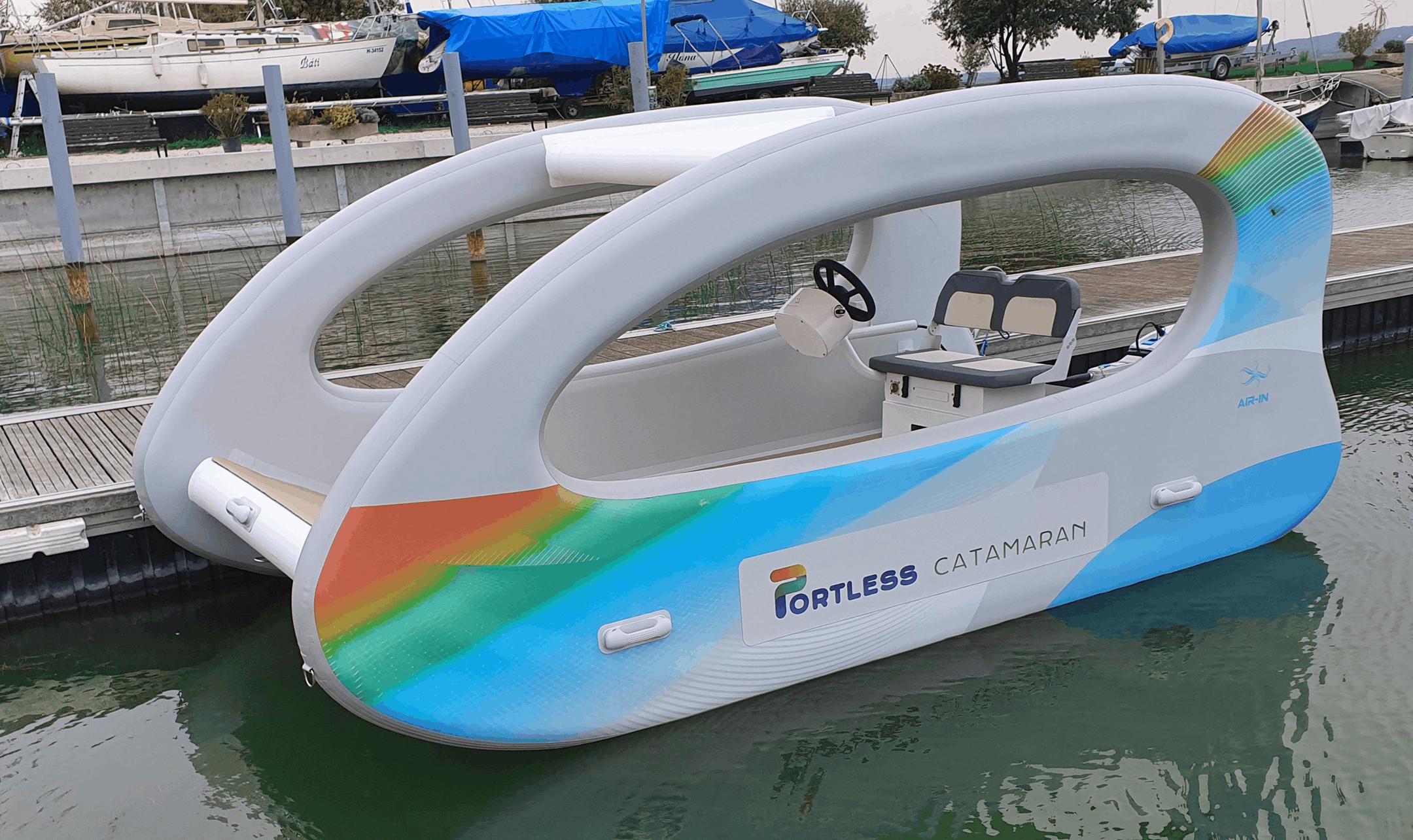
Portless Speedy
The Portless Speedy shared the same hull foundation as the Portless Basic, but featured a Highfield helm station, mounted on a glued plastic base plate.
Despite its name, the large water-contact surface made the boat feel slow and sluggish in practice.
Advantages:
- Steerable helm
- Greater interior height compared to the Basic
Disadvantages:
- Sluggish performance
- Requires a large engine to reach even 10 km/h
- Difficult to assemble and transport
- No seating for passengers
- No storage solutions
- Slippery deck surface
These shortcomings directly inspired the first second-generation model: the Portless Trinity.
Thanks to its three-hull (trimaran) design, the Trinity is:
- Highly maneuverable
- Capable of exceeding 10 km/h with just a 1 kW motor
- Easy to assemble and transport
- Equipped with seating and storage compartments
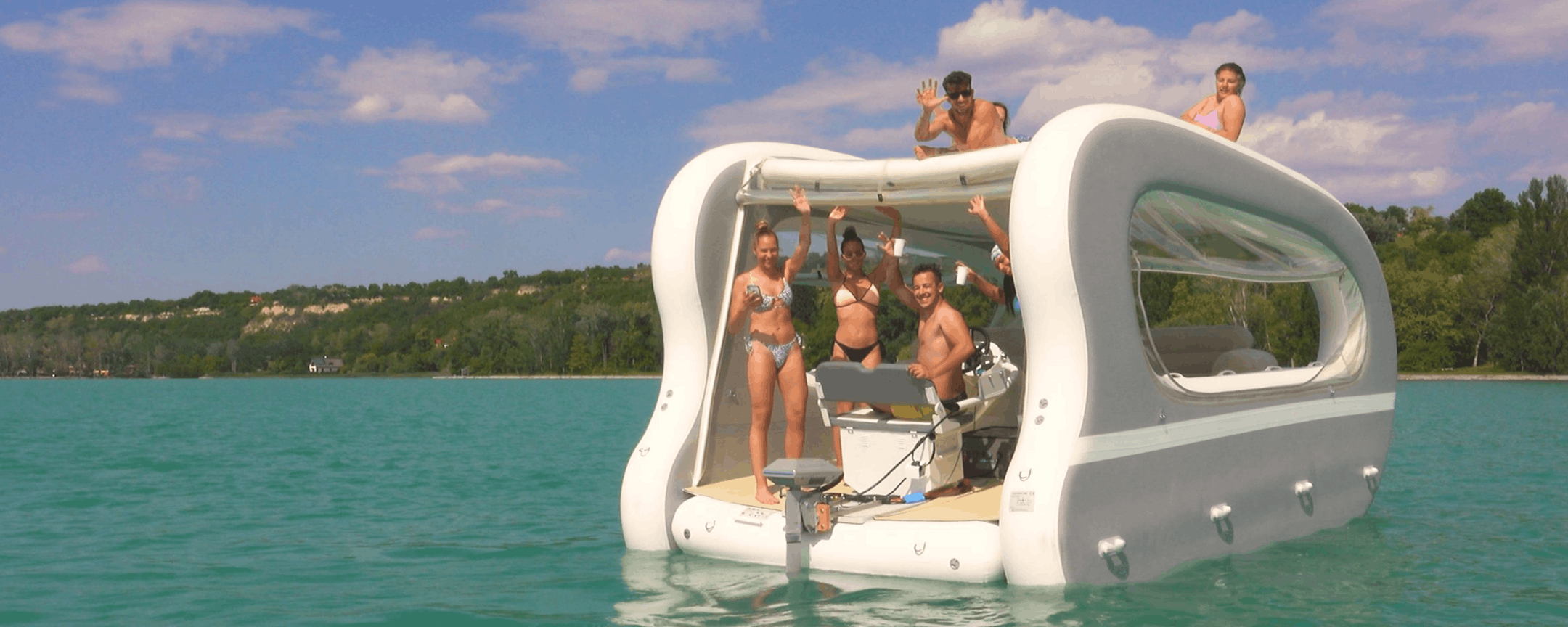
Portless DeLuxe (First Generation)
The most defining feature of the first-generation Portless DeLuxe was its robust size. However, due to its dimensions and early-stage technical solutions, the model never achieved widespread adoption.
Advantages:
- Large usable space
- Functional second level
- Good maneuverability
Disadvantages:
- Extremely difficult to transport
- No storage compartments
- No seating
- Water easily reached the deck
- Difficult handling in waves
- Slippery surface
The design team spent over 1.5 years developing the Portless DeLuxe. Its second-generation successor, already positioned at the top of the Portless product range, introduced so many technical innovations that the two generations are nearly incomparable.
What Comes Next?
Curious about how the Portless DeLuxe evolved into its future form?
Click here to explore the next chapter of the Portless DeLuxe story.